

When you’re running a business in Southampton, picking the right security company isn’t just another item on your to-do list. It’s a fundamental decision that affects the safety of your people and the future of your operations. In a busy port city like ours, you need more than just a generic security firm; you need a partner who truly understands the local landscape.
Why Proactive Security is Non-Negotiable in Southampton
Southampton is a fantastic place to do business, but its role as a major port brings unique security headaches. The constant movement of goods, the bustle of retail parks, and the flow of people create endless opportunities for theft, vandalism, and other disruptions. Simply waiting for something to go wrong isn’t a strategy—it’s an invitation for trouble that can hit your bottom line, your reputation, and your team’s morale.
It’s easy to see security as just another expense, but that’s a shortsighted view. Think of it as an investment in your company’s resilience. The right security measures don’t just respond to problems; they stop them from happening in the first place, creating a safe and secure environment for everyone.
Getting to Grips with Local Risks
The statistics for our city paint a clear picture. In the 2021/22 period, Southampton saw 34,254 recorded crimes. That figure accounts for a staggering 20% of all crimes across the entire Hampshire Constabulary.
This breaks down to a crime rate of 136 incidents per 1,000 people, which is significantly higher than the national average. What’s more, the city’s crime severity score was 1.6 times higher than average, meaning the crimes happening here are often more serious. If you want to dig into the numbers yourself, they’re all in the Safe City Strategic Assessment Report for 2021/22.
These figures aren’t meant to scare you, but to highlight just how vital it is to work with a security provider who knows Southampton inside and out.
A professional security partner does more than just watch a gate; they become an integrated part of your operational defence, safeguarding assets, people, and peace of mind.
A local team brings knowledge you just can’t get from a national company’s handbook. They understand the crime hotspots, the traffic patterns, and the specific weak points a business might have. This kind of on-the-ground intelligence is what turns a security plan from a piece of paper into a practical, effective defence for your business. After all, securing a warehouse near the docks is a world away from protecting a shop in the city centre. This guide is here to help you cut through the noise and find a provider who offers real protection.
What Kinds of Security Services Can You Get in Southampton?
When you start looking for a “security company Southampton,” you’ll quickly run into terms like manned guarding, mobile patrols, and alarm response. It can feel a bit like jargon, but figuring out what they mean is the first real step to building a security plan that actually works for your business.
Think of it like a toolkit. You wouldn’t use a sledgehammer to fix a watch. In the same way, the security you’d need for a bustling retail park like Westquay is completely different from what’s required for a quiet industrial unit in Nursling after hours. Let’s break down the main services so you can see which tool fits the job.
This diagram shows how a single crime can cause a ripple effect, leading to serious disruption and harming the reputation you’ve worked so hard to build.
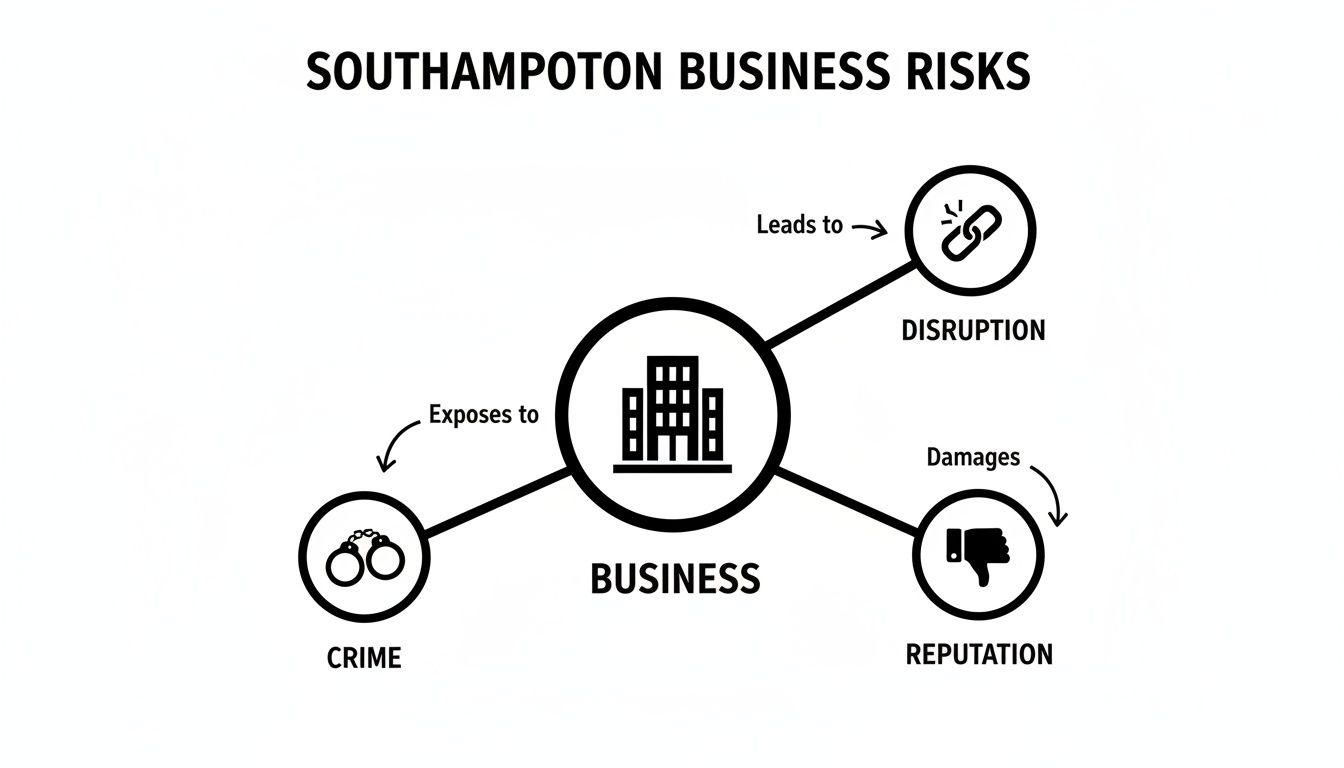
As you can see, the initial incident is often just the beginning. The real damage can spread through your entire operation.
Manned Guarding: The Human Element of Security
Manned guarding, sometimes called static security, is what most people picture when they think of security: a trained, SIA-licensed security officer physically present at your premises. But their role is so much more than just standing by a door.
A professional guard is a powerful, living deterrent. Just having a uniformed officer on-site is often enough to make an opportunistic thief think twice and move on to an easier target. For your team and customers, that same presence offers a real sense of safety and shows you take their well-being seriously.
A guard’s day-to-day duties are vital to keeping things running smoothly:
- Access Control: They’re your gatekeepers, managing who comes and goes—staff, visitors, deliveries—and ensuring only authorised people are in the right places.
- Reception Duties: Often, they are the first face people see, handling front-of-house tasks and acting as a helpful point of contact.
- Incident Response: When something does happen, they are the first on the scene, ready to de-escalate a situation or coordinate with the emergency services.
This service is a perfect fit for places with a lot of people or valuable assets, like corporate offices in the city centre, sprawling construction sites, and busy Southampton retail hubs.
Mobile Patrols: A Smart and Cost-Effective Deterrent
What if you don’t need—or can’t budget for—a guard on-site 24/7? This is where mobile patrols come in as a flexible and highly effective alternative. A security officer in a marked vehicle will visit your property at random, pre-arranged times.
The real strength of this service lies in its unpredictability. Because a potential intruder never knows when the next patrol is due, your site becomes a much riskier proposition. It’s an incredibly efficient way to cover large areas like industrial estates, car parks, or even a portfolio of properties across the city.
Mobile patrols offer a constant, visible security presence without the overheads of a full-time static guard. It’s the ideal middle ground for balancing robust security with a sensible budget.
On top of that, the patrol officer can perform quick but essential checks during each visit. They’ll make sure doors and windows are locked, look for any signs of tampering or vandalism, and can respond immediately if an alarm goes off. It’s a proactive way to spot and fix vulnerabilities before they become real problems.
CCTV Monitoring and Alarm Response: Your Eyes and Ears When You’re Not There
Today’s security is heavily powered by technology, but a camera on its own only records a crime—it doesn’t stop it. When you connect your CCTV system to a professional monitoring service, it becomes a completely different beast. Instead of you sifting through footage after a break-in, our security experts are watching for threats in real-time.
If they spot something suspicious, an operator can intervene immediately. They can issue a live audio warning through on-site speakers—which is often enough to send intruders running—or dispatch a mobile patrol or the police straight to your location. This turns your CCTV from a passive recorder into an active, preventative tool.
Alarm response is the critical service that ties it all together. When an alarm sounds in the middle of the night, the last thing you want is for you or one of your staff to face a potentially dangerous situation. With a key-holding and alarm response contract, a licensed officer is dispatched the moment the alarm is triggered.
They’ll get to your site quickly, assess the situation, reset the alarm, and make sure the property is secure again. You get a full report the next morning and, more importantly, a good night’s sleep. Any credible security company in Southampton should provide guaranteed response times, so you know help is on the way when it matters most.
Which Security Service Fits Your Southampton Business?
Feeling a bit overwhelmed by the options? This quick comparison should help you identify which services might be the best starting point for your particular industry here in Southampton.
| Service Type | Primary Function | Best Suited For (Southampton Examples) | Key Benefit |
|---|---|---|---|
| Manned Guarding | On-site presence, physical deterrence, access control | Construction sites, corporate offices, retail parks, events | High-visibility deterrence and immediate on-site response. |
| Mobile Patrols | Randomised property checks, visible deterrent | Industrial estates, logistics hubs, vacant properties, schools | Cost-effective coverage for large or multiple sites. |
| CCTV Monitoring | Real-time surveillance, active intervention | Warehouses, car parks, commercial premises with blind spots | Proactive threat detection and evidence gathering. |
| Alarm Response | Rapid reaction to alarm activations, key-holding | All businesses with a monitored alarm system, especially retail and offices | Eliminates personal risk and ensures a fast, professional response. |
Ultimately, the best solution often involves a blend of these services. A retail store might combine a daytime manned guard with overnight alarm response, while a large logistics depot could use mobile patrols backed by comprehensive CCTV monitoring.
How to Properly Vet a Security Company
Choosing a security partner in Southampton isn’t like picking any other supplier. You’re not just buying a service; you’re entrusting a company with the safety of your property, your people, and your reputation. It’s easy to get swayed by a glossy brochure or a low price, but finding a provider who is genuinely professional and reliable requires looking a little deeper.
The South East of England is a major hub for the security industry. In fact, it’s home to 1,675 security firms, second only to London. Zoom in on Southampton, and you’ll find at least 37 companies focused specifically on building security, offering everything from traditional manned guarding to sophisticated CCTV systems. With so much choice, a proper vetting process is the only way to ensure you hire a qualified, reputable firm. You can explore more about the local security market on Clutch.co.
Taking the time to ask the right questions helps you separate the real professionals from the operators who might cut corners, leaving your business exposed. It’s about knowing what to look for and what a good answer sounds like.
Start with the Non-Negotiables
Before you even think about services or costs, there are a few fundamental credentials every legitimate security company in the UK must have. These are the basics that prove they operate legally and to a recognised professional standard.
Your first port of call should be their SIA (Security Industry Authority) Approved Contractor Scheme (ACS) status. The SIA is the government body that regulates the UK’s private security industry. While every individual guard must hold an SIA licence to work, a company with ACS accreditation has gone the extra mile.
ACS accreditation is a hallmark of quality. It shows that a security company has voluntarily submitted itself to independent inspections and meets a high standard of performance across its operations, from staff training to financial health.
Here’s a simple way to think about it: an SIA licence for a guard is like a driving licence for a driver. But ACS status for the company is more like a professional haulier’s operator licence—it shows the entire organisation is run competently, safely, and responsibly.
Essential Questions for Your Shortlist
Once you’ve confirmed their SIA credentials, it’s time to dig a little deeper to see if they’re the right fit for you. The goal is to understand their operational muscle, their local knowledge, and their commitment to looking after their clients.
Here are the key areas to probe:
- Local Experience and Presence:
- How long have you been operating in the Southampton and Hampshire area?
- Can you give me examples of businesses like mine that you currently protect locally?
- Where is your nearest local office or response hub? A quick response depends on proximity.
- Training and Staff Vetting:
- What training do your officers receive on top of the basic SIA licence?
- How do you screen your employees? You’re looking for them to mention BS7858 vetting, which is the industry standard.
- What is your staff retention rate? A high turnover can be a huge red flag for quality and consistency.
- Operational Procedures:
- What are your standard procedures for reporting an incident?
- Could you show me a sample of a daily occurrence log or an incident report? This gives you a feel for their professionalism.
- For alarm response, what is your guaranteed response time in your Service Level Agreement (SLA)?
Verifying a Company’s Track Record
Talk is cheap, and any salesperson can promise the world. The final step is to verify their claims through independent sources. This is where you can truly gauge how reliable a potential security partner will be.
- Ask for References: Don’t just ask if they have them. Ask for the contact details of current clients in a sector similar to yours. A confident, quality company will have no problem with this.
- Check Online Reviews: Look at Google, Trustpilot, and other independent review sites. It’s not just about the star rating; pay close attention to how the company responds to both positive and negative feedback.
- Request Case Studies: Ask for specific, detailed examples of how they solved a security problem for another client. Look for measurable results, like a documented reduction in theft or vandalism.
Investing time in this vetting process is one of the most important things you can do for your business’s security. It’s the difference between hiring a supplier and finding a true partner who will protect your assets and add real value to your operations.
Matching Security Solutions to Local Industries
A generic security plan just doesn’t cut it. Thinking you can apply the same strategy to every business in Southampton is like trying to use one key for every lock in the city – it’s a recipe for disaster. The risks facing a sprawling construction site next to the M27 are worlds away from those threatening a high-end jeweller in Westquay.
Any security company in Southampton worth its salt knows this. They don’t just sell you an off-the-shelf package. Instead, they act more like a bespoke tailor, carefully measuring the specific risks your industry faces and crafting a security strategy that fits your business perfectly. This means getting to grips with the day-to-day reality of your operation – your vulnerabilities, your busiest hours, your most valuable assets, and the unique challenges of your location.
Let’s break down what this looks like for some of Southampton’s key sectors.
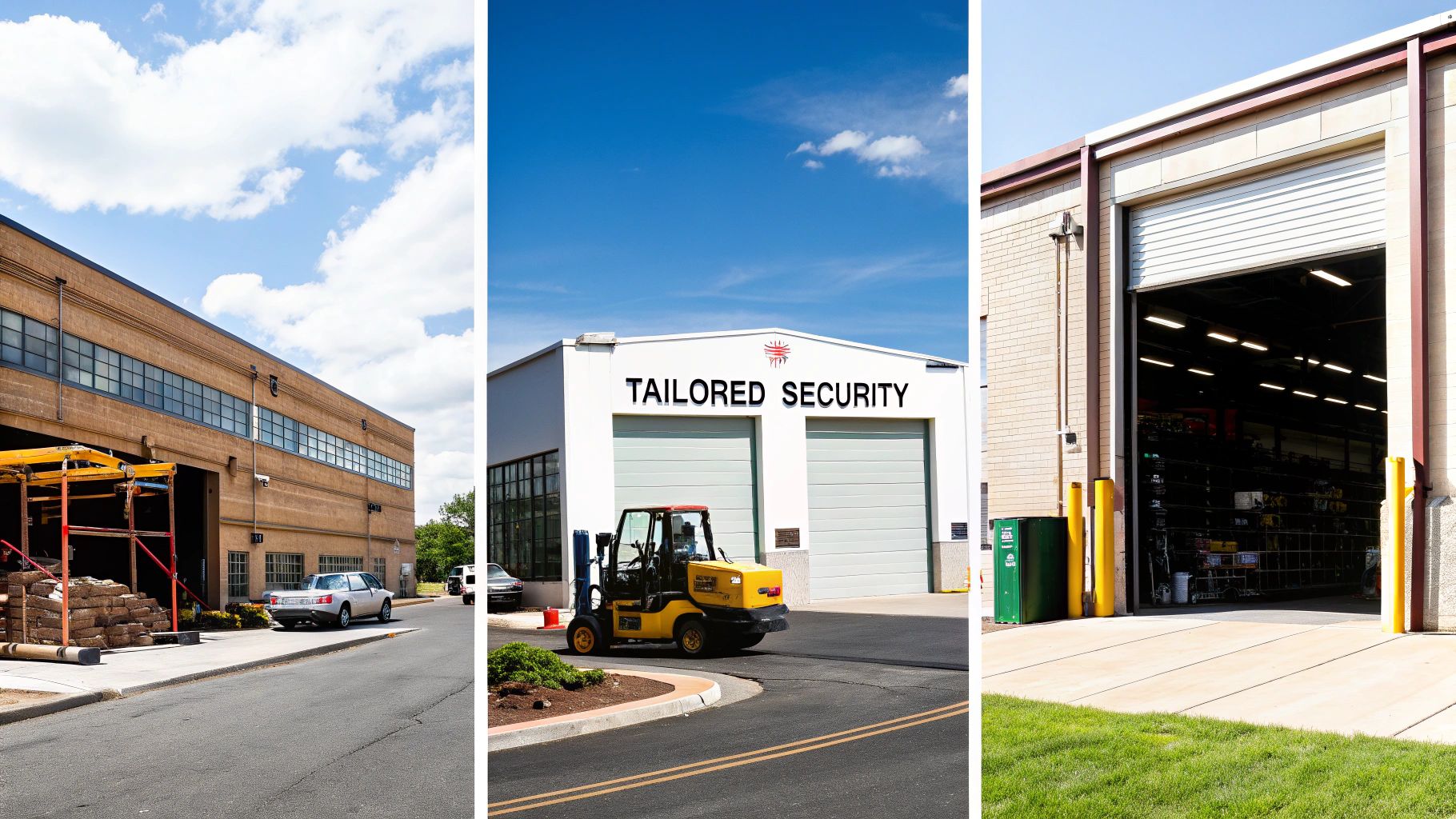
Securing High-Value Construction Sites
Construction sites are a magnet for thieves. They’re often temporary, with perimeters that change daily and a constant stream of different contractors coming and going. More to the point, they are absolute treasure troves of valuable gear, from heavy machinery and power tools to raw materials like copper piping.
Left unguarded, especially overnight or on a long weekend, these sites become a prime target for organised crime. It’s not just about stopping theft; it’s about preventing the kind of costly project delays that can bring a build to a standstill. A specialist security plan focuses on creating a solid perimeter and controlling exactly who comes and goes.
Here’s what’s crucial:
- Robust Access Control: Having a guard on the gate to log every person and vehicle is non-negotiable. This stops unauthorised access dead in its tracks and gives you a clear record of who was on-site and when.
- Visible Manned Guarding: Nothing deters an opportunistic criminal faster than the sight of a uniformed officer actively patrolling the site. It sends a powerful message: this site is protected.
- Mobile Patrols for After-Hours Cover: Random, unpredictable patrols in the evenings and on weekends are a fantastic way to disrupt criminal planning. If they can’t predict when a guard will show up, they’re much more likely to move on to an easier target.
- Smart Technology: Mobile CCTV towers with remote monitoring add another vital layer of surveillance, especially for covering those dark corners and blind spots.
For construction managers, solid security isn’t an expense; it’s a core part of project management. It protects your bottom line by preventing the theft of assets that could halt progress for days, or even weeks.
Protecting Commercial and Office Properties
For office buildings and commercial properties, say in Ocean Village or the city centre, the security focus shifts entirely. Here, the priority is creating a safe and welcoming environment for employees and visitors while protecting sensitive data and expensive equipment. The real trick is to be secure without making the place feel like a fortress.
When the last person leaves for the day, that’s when the real worry starts for many businesses. An empty office building is an incredibly tempting target for a break-in.
A smart security strategy blends people with technology:
- Professional Front-of-House Security: A great front-desk guard does more than just watch a door. They can manage visitor sign-ins, issue passes, and handle deliveries, all while maintaining a secure but friendly atmosphere.
- Key Holding and Alarm Response: This service is a game-changer. It means you never have to send one of your own team to investigate a late-night alarm. Instead, a trained officer responds immediately, assesses the situation, and makes sure the building is secure again.
- Internal and External Patrols: Regular checks of all floors, car parks, and fire exits ensure nothing gets missed, whether it’s a door propped open or a suspicious vehicle lurking outside.
This kind of integrated approach means your building is just as secure at 2 AM as it is at 2 PM.
Loss Prevention for Retail and Hospitality
Southampton’s shops, bars, and restaurants face a tricky double threat: shoplifting from customers and theft from within. On top of that, they have to maintain a positive, welcoming vibe. Heavy-handed security can scare away customers, so it’s all about finding that delicate balance between being effective and being discreet.
The right security company in Southampton will provide officers trained in customer service and de-escalation. Their job is as much about being a helpful presence as it is about being a deterrent.
Effective retail security often looks like this:
- Store Detectives: Plain-clothed officers who blend into the crowd to spot and handle shoplifters without causing a big scene.
- Uniformed Guards: Positioned at entrances or near high-value goods, they act as a clear visual deterrent and a point of contact for staff who need help.
- CCTV Monitoring: Proactively watching feeds helps staff spot suspicious behaviour in real-time, letting them intervene before a theft even happens.
Gatehouse Management for Logistics and Warehousing
As a major port city, Southampton is a massive hub for logistics and warehousing. For these businesses, the gatehouse is the heart of the entire security operation. Every single lorry, driver, and delivery has to be managed meticulously to protect the whole supply chain.
Get gatehouse management wrong, and you open the door to cargo theft, unauthorised access, and huge operational headaches. A professional security officer in this role is doing far more than just lifting a barrier. They are verifying paperwork, logging vehicle details, and ensuring every driver follows health and safety rules. Their diligence is the first and most critical line of defence for the entire site.
Getting to Grips with Security Costs and Contracts
Let’s talk about the elephant in the room: money. It’s often the trickiest part of the conversation, but getting it right is fundamental to a successful partnership. When you’re looking for a professional security company in Southampton, you’re not just spending money; you’re making a strategic investment. The aim is to strike that perfect balance between what’s realistic for your budget and what’s non-negotiable for protecting your business.
There’s no simple price list for security services. The final figure is always a reflection of your unique situation—the level of risk at your site, the specific duties required, and the type of cover you need. Any provider worth their salt will be completely transparent about how they arrive at their pricing, so you can see exactly where every penny is going.
Common Pricing Models Explained
Most security firms in the South East use a few standard pricing models. Getting your head around these will make it much easier to compare quotes and see the real value on offer.
- Hourly Rates for Guards: This is the bread and butter for static guarding. The rate is influenced by a few things: the guard’s experience, the shift pattern (nights and weekends usually cost a bit more), and the complexity of their duties.
- Fixed-Term Contracts: If you need something consistent, like mobile patrols or key holding, you’ll probably be looking at a monthly or annual fee. This gives you predictable costs and often works out better financially for long-term arrangements.
- Per-Response Fees: For alarm response, a monthly fee might cover a certain number of call-outs. If you need more, you’ll be charged for each additional response. It’s a fair system that means you only pay for what you actually use beyond the baseline.
A quick word of advice: don’t just fixate on the headline price. A slightly higher quote from a reputable company often means better training for their officers, more robust operational support, and proper insurance. These things deliver far more value and peace of mind when it really counts.
What to Look for in Your Service Agreement
Once you’ve got a handle on the costs, the service agreement is the next crucial step. This is the legal document that sets out everyone’s responsibilities, and it’s your safety net. Don’t just give it a quick glance—read it properly. A good firm will be more than happy to talk you through any clause you’re unsure about.
The contract is essentially the blueprint for your entire working relationship. Getting it right from the outset prevents headaches down the line and ensures everyone is on the same page.
Here are the absolute must-haves to check for:
- Scope of Services: This needs to be crystal clear. It should list the exact duties of the guards, how often patrols will happen, and which specific areas they are tasked with protecting. Ambiguity here is a red flag.
- Liability and Insurance: What happens if something goes wrong? The contract must clearly state the security company’s public liability insurance details. This is your protection against claims of negligence or unforeseen incidents.
- Incident Reporting Procedures: How will you be kept in the loop? The agreement should detail exactly how incidents are recorded, what information you’ll receive in a report, and how quickly you’ll be notified. This is all about clear communication when you need it most.
- Termination Clause: You need to know how the relationship can be ended, by either side. Look for the notice period required and any fees for ending the contract early. It gives you a clear and fair exit strategy if things don’t work out.
Asking detailed questions about the contract doesn’t make you difficult; it shows you’re a savvy business owner. Any trustworthy security company in Southampton will appreciate the diligence. It lays the groundwork for a solid, transparent partnership built on mutual respect.
Why Physical and Digital Security Go Hand in Hand
In this day and age, a sturdy lock on the door and a CCTV camera are just starting points. Real business security means looking beyond the obvious and realising that some of your most valuable assets aren’t in a stockroom—they’re sitting on a server.
Think of it like this: your business has two front doors. One is your physical premises in Southampton—the office, warehouse, or shop. The other is your digital front door: your website, customer database, financial records, and internal network. Leaving your digital door wide open is just as careless as forgetting to lock up at night.
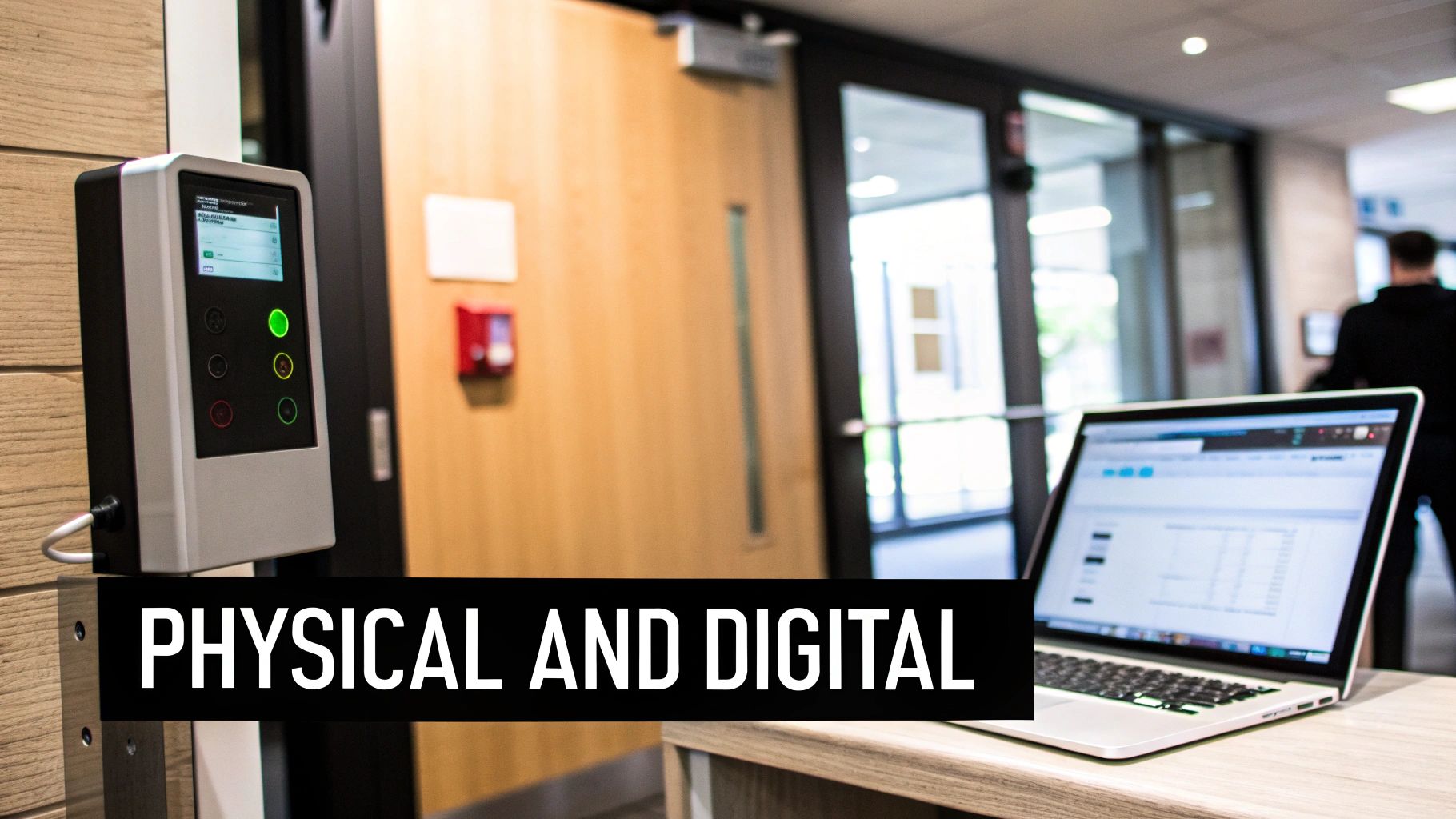
This is precisely where a modern security company in Southampton proves its worth. They get that a proper strategy has to protect you from both a crowbar and a dodgy email attachment.
The Connection Between All Vulnerabilities
The dangers lurking in the digital world are just as real as a smashed window. Instead of a break-in, you could be hit with a ransomware attack that freezes all your crucial files. Instead of shoplifting, you could fall for a phishing scam where a staff member is tricked into handing over sensitive login details.
And these two worlds are far more connected than you might imagine:
- Access Control: A security guard checks IDs at the entrance. In the digital realm, strong password policies and multi-factor authentication are your gatekeepers.
- Surveillance: CCTV keeps an eye on your property for any suspicious behaviour. Network monitoring tools do the exact same thing for your digital traffic, flagging signs of an intruder.
- Incident Response: An alarm response team races to your site when a break-in is detected. A cybersecurity incident response plan is the digital equivalent, designed to contain a data breach and get you back on your feet quickly.
A complete security strategy addresses vulnerabilities wherever they exist. It recognises that a data breach can be just as disruptive and costly as a physical theft, if not more so.
Fortifying Your Digital Defences in Southampton
You don’t need to become a cybersecurity expert overnight, but simply being aware of the risks is a massive first step. Unfortunately, a recent study flagged Southampton as the UK’s third least security-conscious place to live. That casual attitude can easily bleed over from home life into business practices.
This makes it vital to partner with local specialists who understand the landscape. To get a better sense of who can help, you can find additional information about cybersecurity in Southampton.
Protecting your business properly means creating a culture of security awareness. It’s about training your team to spot suspicious emails and helping them understand why secure data handling is so important. When you’re talking to a potential security provider, ask them how their physical services support a strong digital defence. That integrated approach is the key to building a resilient business that’s ready for anything.
Got Questions? We’ve Got Answers
When you’re looking into security services, a few practical questions always come up. Here are some straightforward answers to the things businesses in Southampton most often ask, helping you get the clarity you need to make the right choice.
What’s the Deal with Contract Lengths?
This really comes down to what you need. While a standard 12-month agreement is pretty common for ongoing services like having a regular security guard on-site, there’s usually plenty of flexibility.
If you’re running a short-term construction project or need temporary cover, you’ll find that fixed-term or rolling monthly contracts are the norm. For one-off events, it’s usually just a single, agreed fee. The key takeaway? Always read the small print, especially the cancellation policy, before you commit.
Do Security Guards in the UK Carry Guns?
Simply put, no. Security guards in the United Kingdom are not armed. Their role is all about preventing trouble, not engaging in combat. Professional training focuses on being a sharp-eyed deterrent, de-escalating tense situations, and acting lawfully.
The only time you’ll see armed security is in highly specialised government operations. A professional guard’s real power lies in their training, vigilance, and communication skills – not in carrying a weapon.
This approach keeps everyone safer and ensures any incidents are managed responsibly.
How Quickly Can Someone Respond to an Alarm in Southampton?
For a key holding and alarm response service, a good local company should be on-site within 20 to 30 minutes in and around the city. Of course, this can be affected by things like rush-hour traffic on the M27 or the exact location of their nearest patrol.
When you’re talking to potential providers, make this a direct question. Ask for their average response times and, more importantly, what their guaranteed maximum time is. This should be spelled out clearly in your Service Level Agreement (SLA), so you have a concrete promise that help will be there when you need it most.
For a security partner that truly understands the unique challenges of our city, get in touch with Executive Securities Personnel Ltd. Request a free, no-obligation security survey for your Southampton premises today.